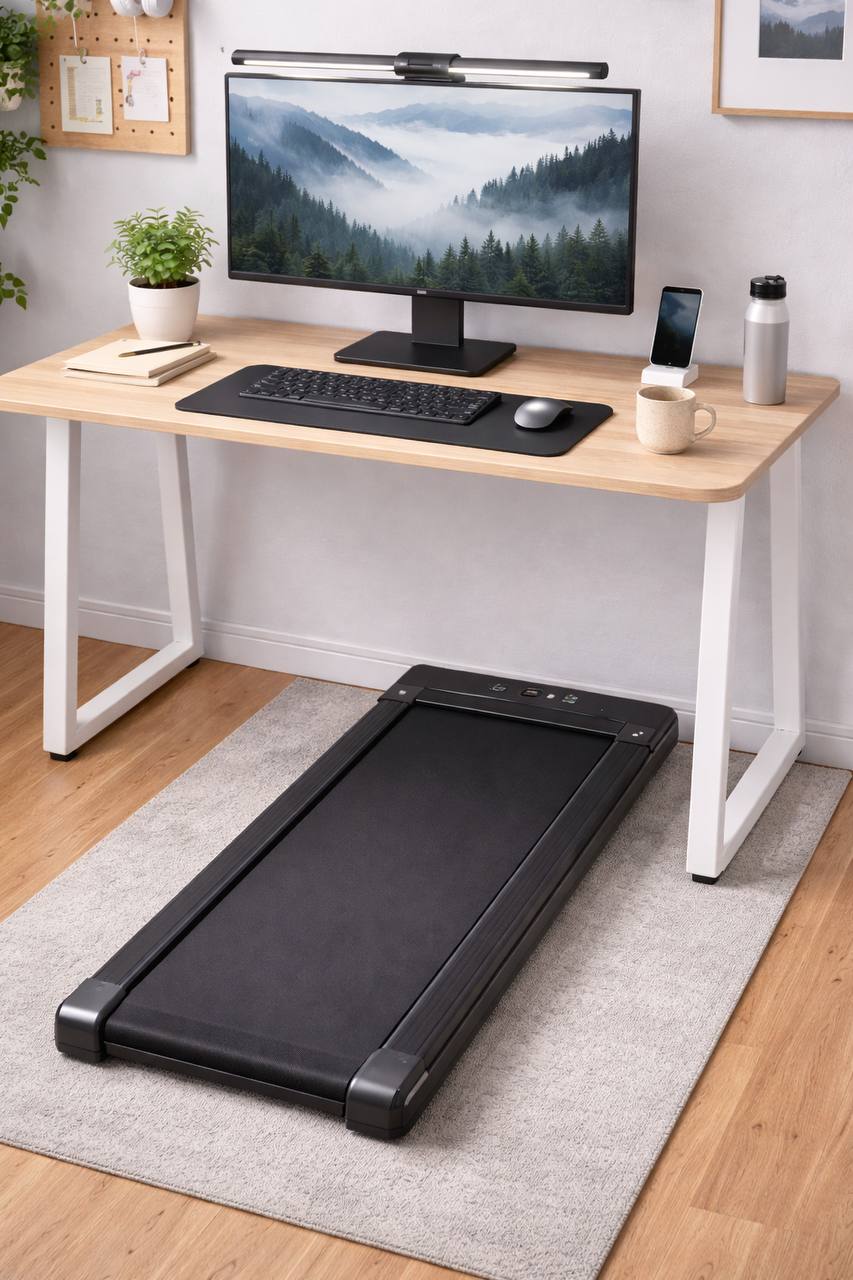
Best under desk treadmill for home office UK: practical buying guide that avoids expensive mistakes
Affiliate disclosure: This guide includes affiliate links. If you buy through them, we may earn a commission at no extra cost to you.
If you work from home and spend most of the day sitting, an under-desk treadmill can be one of the few upgrades that changes how your body feels by the end of the week. You get movement while you work, your back usually complains less, and long calls stop feeling so static.
The problem is that most buying guides make this sound too simple. They focus on speed, flashy app features, and “quiet motor” claims without telling you what actually matters in a home office: desk-height compatibility, realistic noise at walking pace, and whether the machine stays stable for daily use.
This guide is built for UK buyers who want the best under desk treadmill for home office use without wasting money on the wrong format. You will get category comparisons, fit checks, setup advice, and a decision framework that works whether you buy from Amazon UK or elsewhere.
Inline examples from common UK ranges (walking pads, foldable 2-in-1 units, compact office-first models) are included only for context. The focus is choosing the right type first, then narrowing to specific models.
Quick answer: what most home-office buyers should prioritize
If you want the short version, the best under-desk treadmill for most UK home offices has:
- True walking-first design (stable at low speeds, not just “can run fast”).
- Enough belt width and deck length for your stride so you do not feel cramped.
- Practical noise profile at 2–4 km/h during calls.
- A realistic user weight limit with some headroom, not right at the maximum.
- Remote controls that respond consistently and allow small speed changes.
- Clear storage plan for your room (under sofa, against wall, or fixed at desk).
For many people, a mid-range walking pad with sensible dimensions and solid low-speed stability outperforms a “2-in-1” unit that promises more but feels clumsy for actual desk work.
Category comparison: which under-desk treadmill type fits your setup?
| Category | Best for | Typical UK price band | Main strengths | Main trade-offs |
|---|---|---|---|---|
| Compact walking pad (office-first) | Daily desk walking and simple storage | ~£180–£350 | Easy to use, smaller footprint, lower complexity | Usually no incline, less suitable for running workouts |
| 2-in-1 foldable treadmill | Mix of desk walking + occasional jogging | ~£250–£550 | More versatile speed range and workout options | Bulkier, often noisier, can be less smooth at low desk speeds |
| Heavy-duty office treadmill | Long daily walking blocks and higher load demands | ~£550–£1,200+ | Better durability, stronger frames, steadier feel | Higher price and heavier unit to move/store |
| Ultra-budget mini pad | Testing the concept on a tight budget | ~£130–£220 | Low entry cost, compact design | Inconsistent quality, weaker warranty, noisier long-term use |
Most buyers do best in the first or second category. The heavy-duty class is worth it if you use it for long blocks every day and care more about reliability than initial cost.
How to choose in the right order (so you don’t return it in week one)
The order matters. If you skip straight to “best rated” products, you can still end up with a bad fit for your room or desk.
1) Start with desk compatibility, not treadmill specs
Walking pads raise your standing position. If your desk cannot rise enough, your elbows end up too low and shoulder tension appears quickly. This is the most common problem people miss.
- Check treadmill deck height first.
- Confirm your desk still supports neutral elbow angle while walking.
- Account for shoes (they add a little more height).
If your desk range is limited, this alone can rule out certain models regardless of their reviews.
2) Separate motor noise from footfall noise
“Quiet” claims are often vague. In real home-office use, two sounds matter:
- Motor sound: humming/whirring from the unit itself.
- Footfall transfer: vibration and impact into the floor.
A machine can have a reasonable motor and still annoy downstairs neighbours if impact transfer is high. A proper mat and calmer stride help, but base stability and deck cushioning matter too.
3) Choose belt dimensions for comfort, not just compactness
Too narrow and you feel like you are balancing on a strip. Too short and your stride gets clipped. That can make typing harder and increases fatigue.
As a practical rule, prioritize a deck that gives comfortable side margin and enough front-back confidence at your normal work pace.
4) Prioritize low-speed stability over top speed marketing
For home-office walking, most people stay around easy pace ranges for calls and typing. Smoothness at those speeds matters far more than the machine’s maximum speed headline.
Many buyer issues come from choosing a “run-capable” unit that feels jumpy in slow desk use. If your primary goal is working while moving, choose walking-first behavior.
5) Check control workflow before buying
You will adjust speed more than you think. If controls lag, drift, or only change in large jumps, day-to-day use becomes annoying fast.
- Look for responsive remote control with small speed increments.
- Check whether settings are readable while standing at desk.
- Confirm easy stop/start behavior during calls or interruptions.
6) Plan storage honestly for your room layout
Some “compact” units are still awkward to move daily. If you intend to store it after each session, weight and wheel design matter almost as much as dimensions.
If you know you will leave it under the desk full-time, heavier units become more practical and can feel more stable.
7) Treat weight capacity and warranty as durability signals
Higher stated limits and clearer support terms often correlate with better build quality, though not always. For daily use, choose a model with headroom above your own weight rather than sitting close to maximum.
Also check what warranty actually covers (motor, frame, electronics) and how UK support is handled.
Best under-desk treadmill type by use case
Best for meeting-heavy days
Choose a stable walking pad with smoother low-speed control and modest noise. You need predictable pace changes and minimal distraction while speaking.
Best for deep focus and typing blocks
Prioritize deck stability and comfortable belt dimensions over workout features. If the walking feel is twitchy, concentration drops fast.
Best for smaller flats or shared homes
Compact units with easier storage and lower impact transfer usually fit better. A quality mat is almost mandatory in this scenario.
Best for heavier daily use
Move toward heavier-duty frames with stronger support and clearer warranty terms. You pay more upfront but usually avoid the churn of replacing low-end units.
Pros and cons of under-desk treadmills for home-office work
Pros
- Adds movement to otherwise static workdays.
- Can improve energy and reduce prolonged sitting fatigue.
- Works well with standing desks without leaving the office workflow.
- Usually easier to sustain than separate workout sessions for busy schedules.
Cons
- Noise and floor vibration can be a real issue in some homes.
- Poor desk-height pairing can create new ergonomic problems.
- Budget units can feel unstable or wear quickly with daily use.
- Not ideal for tasks requiring very fine mouse precision at faster paces.
Most downsides are manageable if you choose the right category and set it up properly from day one.
10-point pre-buy checklist (use this before checkout)
- Desk range check: your standing desk can reach comfortable typing height while you are on the treadmill.
- Room fit check: deck dimensions suit your desk area and movement space.
- Storage check: you have a realistic place to park it when not in use (if needed).
- Noise check: reviews mention usable noise levels at walking pace, not just “quiet” as a vague claim.
- Stability check: users report steady low-speed behavior for work sessions.
- Control check: remote/display workflow allows easy small speed adjustments.
- Load check: capacity leaves sensible headroom above your own weight.
- Support check: warranty and UK after-sales process are clear.
- Floor check: you have or will buy a proper treadmill mat for vibration reduction.
- Return check: return process and trial window are acceptable if fit/noise is wrong.
If two or more points fail, pause and shortlist a different model category.
First-week setup plan that avoids frustration
- Day 1: place the treadmill, set desk height, and test 10–15 minutes at easy pace.
- Day 2: run one meeting block while walking to test call comfort and noise behavior.
- Day 3: tune speed increments for typing comfort and note your best range.
- Day 4: test with different footwear and stride patterns for noise and comfort.
- Day 5: run two shorter blocks instead of one long block to reduce early fatigue.
- Day 6: recheck desk ergonomics (elbow height, screen height, wrist angle).
- Day 7: decide keep/return based on real workflow fit, not novelty.
This staged approach matters. Most “it didn’t work for me” outcomes come from trying to do too much too fast in the first two days.
Common mistakes that make people quit under-desk treadmills
- Walking too fast while trying to type precisely.
- Skipping desk-height adjustments after adding treadmill height.
- Ignoring vibration control in flats or upstairs rooms.
- Buying by top speed instead of low-speed stability.
- Assuming one model works equally well for all body sizes and stride lengths.
- Trying long sessions immediately instead of building gradually.
Fixing these early usually turns a “maybe” purchase into a sustainable daily tool.
Under-desk treadmill vs alternatives (quick comparison)
| Option | Best for | Work compatibility | Main limitation |
|---|---|---|---|
| Under-desk treadmill | Low-intensity movement during normal tasks | High for calls/admin, medium for precision work | Noise/vibration and desk compatibility checks needed |
| Desk bike | Seated movement while working | Medium | Can alter hip posture and desk spacing |
| Mini stepper | Short activity bursts | Low while typing | Harder to sustain during continuous work |
| Scheduled walk breaks | Simple no-equipment movement | N/A (outside work blocks) | Hard to maintain consistently on busy days |
If your goal is movement without leaving the desk workflow, treadmills still win for most people.
UK price bands and what they usually mean
- ~£130–£220: entry-level walking pads. Good for testing the concept, but quality variance is high.
- ~£220–£400: most practical value zone for home-office use. Better balance of stability, controls, and support.
- ~£400–£700: stronger materials, smoother operation, often better long-session comfort.
- ~£700+: heavy-duty office-focused options with durability advantages for daily long blocks.
For most households, the middle band is where reliability and value overlap best.
Maintenance and reliability checks most buyers ignore
Under-desk treadmills are usually straightforward, but reliability depends on small habits. If you skip maintenance, even a good unit can feel noisy or rough much earlier than expected.
- Belt alignment: check occasionally and correct if it starts drifting left or right.
- Lubrication schedule: follow the manufacturer guidance; dry belts increase wear and noise.
- Dust control: keep the deck area clean, especially in rooms with carpet fibres or pet hair.
- Cable and plug checks: avoid loose extension setups that can interrupt power mid-session.
- Mat condition: replace worn mats if vibration transfer starts increasing again.
These checks take minutes and usually save you from the “it got loud after two months” problem.
Who should skip an under-desk treadmill?
They are useful for many setups, but not every situation. You may be better with scheduled walk breaks or a different movement option if:
- Your desk cannot reach ergonomic height once treadmill deck height is added.
- Your room has severe vibration constraints and no practical mitigation options.
- Your role requires constant precision pointer work where walking degrades output.
- You strongly dislike any background machine noise during work.
Being honest here avoids expensive trial-and-error. The right answer is the setup you can sustain comfortably, not the trendiest one.
FAQ: best under desk treadmill for home office UK
Are under-desk treadmills actually quiet enough for calls?
Many are usable for calls at easy walking pace, but “quiet” varies by model and floor type. Motor sound and footfall transfer both matter. A quality mat and moderate pace help significantly.
What speed is realistic for typing and office work?
Most people work best at lower walking speeds rather than exercise pace. You can speak and type more naturally when stride is controlled and stable.
Do I need a standing desk to use one properly?
For true under-desk working use, yes, an adjustable standing desk is usually required. Without it, your ergonomic position is difficult to maintain while walking.
Is a 2-in-1 treadmill better than a walking pad?
Only if you genuinely plan to jog as well. For pure desk work, many people prefer office-first walking pads because they are simpler, often quieter at low speed, and easier to integrate daily.
How long should I walk at my desk each day?
Start with shorter blocks and build gradually. Consistent moderate use usually works better than trying very long sessions from day one.
Do under-desk treadmills work in flats?
Yes, but vibration control is crucial. Choose stable units, use a proper mat, and keep pace moderate. Floor construction affects outcomes more than marketing claims.
Can I use one if I am heavier than average?
Yes, as long as you choose a model with sufficient load capacity headroom and stronger build quality. Avoid operating near maximum limits for daily long-session use.
What’s the biggest mistake to avoid?
Ignoring desk compatibility. If your desk height cannot accommodate treadmill deck height, comfort drops quickly and the setup becomes hard to sustain.
Final verdict
The best under-desk treadmill for a UK home office is the one that matches your desk range, room constraints, and daily work style. Fit and low-speed stability matter more than flashy speed numbers or gym-style marketing.
If you choose the right category, run the one-week setup plan, and keep expectations realistic, an under-desk treadmill can become one of the highest-impact upgrades in your workspace.
Next step: measure your desk height range and floor space, shortlist two compatible models, and compare them using the 10-point checklist above before you buy.
Leave a Reply