Affiliate disclosure: This guide contains affiliate links. If you buy through them, we may earn a commission at no extra cost to you.
If your chair wheels are sinking into carpet, snagging every time you try to move, or leaving dents that never really recover, you need a proper chair mat. A good mat does three things at once: it protects carpet fibers, improves rolling comfort, and reduces strain on your back and hips from micro-resistance during every movement.
The problem is that most people buy the wrong one first. They choose by size only, or pick the cheapest “carpet mat” they see, then wonder why it cracks, slides, or still feels sticky. The mat itself is rarely the real issue. The mismatch is. Carpet pile height, foam underlay, chair wheel type, and mat thickness all have to align.
This guide focuses on practical buying decisions so you can choose once and move on. If your goal is simple – smooth rolling and no carpet damage – this will get you there.
Quick answer: what is the best office chair mat for carpet?
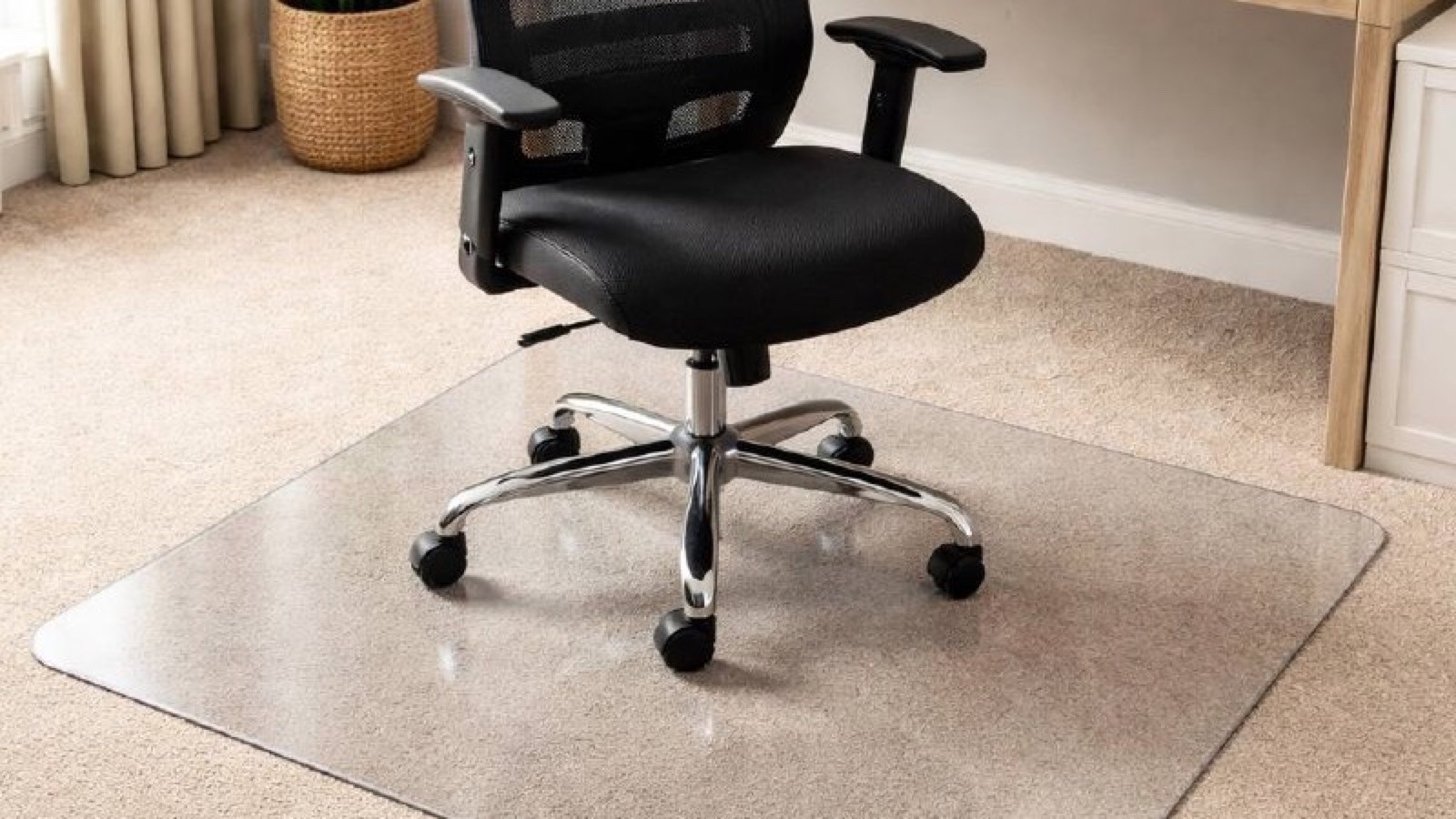
For most people, the best office chair mat for carpet is a thick, rigid polycarbonate or premium PET mat designed specifically for carpet pile, with a grippy underside and enough depth for your normal movement pattern.
- Low-pile carpet: medium-thickness hard mat usually works well.
- Medium pile: use a thicker mat with better underside grip.
- Plush/high pile: prioritize maximum rigidity and larger footprint.
- Heavy users or 8+ hour days: choose higher-end materials over budget PVC.
If your mat still feels “draggy,” the issue is usually flex or under-sizing, not your wheels.
Why carpet chair mats matter more than people think
People underestimate how much friction their chair adds to daily fatigue. On soft carpet, standard office casters sink slightly and create rolling resistance in every direction change. That constant low-level effort adds up over long sessions. You unconsciously brace your hips and twist your lower back just to reposition. Over time, that gets uncomfortable fast.
A proper mat creates a stable rolling surface so your movement is controlled instead of jerky. It also spreads pressure away from tiny wheel contact points, which helps prevent permanent carpet flattening or divots around your desk zone.
Best office chair mat types for carpet (comparison table)
| Mat type | Best for | Durability | Roll feel | Watch out for |
|---|---|---|---|---|
| Polycarbonate carpet mat | Most home offices, daily use | High | Smooth and firm | Cheap versions can be too thin |
| PET rigid mat | Mid-range value setups | Medium-high | Good | Can bow if under-specced for plush carpet |
| PVC/vinyl mat (budget) | Light use, temporary setups | Low-medium | Acceptable at first | Curling, cracking, soft spots over time |
| Tempered glass chair mat | Premium feel and long-term stability | Very high | Excellent | Weight, edge handling, higher price |
For carpet specifically, rigidity is everything. If the mat flexes too much, wheels still sink and rolling gets heavy. That is why “cheap but thick-looking” mats disappoint: apparent thickness is not the same as structural strength.
How to choose the right chair mat for your carpet (the decision framework)
Use these checks in order. They prevent almost every bad purchase.
1) Match mat spec to carpet pile and underlay softness
Carpet pile labels can be vague, so use practical feel instead. If you press a finger into the carpet and it rebounds slowly, that surface needs a stiffer mat. If you can visibly compress carpet + underlay by hand, do not buy a thin budget mat and expect smooth rolling.
- Low pile / firm underlay: easier to support.
- Medium pile / medium underlay: mainstream sweet spot for robust polycarbonate.
- High pile / plush: choose highest rigidity category available.
2) Check real rigidity, not just marketing thickness
Some mats advertise thickness while still feeling soft under load. Look for user feedback about long-term flatness and crack resistance. If reviewers mention “chair tracks” or permanent wheel dents in the mat itself, skip it.
3) Get the right size for your actual movement zone
Most mats fail because they are too small for real work patterns. People rotate, lean, and slide side-to-side more than they think. If your wheels repeatedly cross mat edges, you get the worst of both worlds: abrupt transitions and concentrated carpet damage.
A simple sizing method: sit at your desk and mark your farthest wheel positions in all directions during normal tasks. Then add margin. That gives you a functional footprint instead of a guess.
4) Consider underside grip and anti-slip behavior
On carpet, mat drift is incredibly annoying. You want a base pattern or tooth profile that holds without tearing fibers. Good carpet mats should stay planted under rolling load and only shift minimally during repositioning.
If your desk sits in a high-traffic room, prioritize anti-slip performance even over visual clarity.
5) Match caster type to the mat surface
Chair wheels and mat material interact. Harder casters can feel noisy on rigid mats, while softer rollerblade-style casters can smooth movement and reduce sound. If your current casters feel rough, upgrading wheels may transform the whole setup without changing the mat.
If you are already optimizing desk ergonomics, this related guide can help with movement posture and setup flow: Home office desk setup layout and cable flow.
Best mat choice by carpet type
Low-pile carpet
This is the easiest case. Most mid-range rigid mats perform well. Your main focus should be size and edge profile, not extreme thickness.
- Good choice: standard rigid polycarbonate/PET mat.
- Avoid: ultra-budget soft vinyl that curls at corners.
- Upgrade priority: larger footprint if you move a lot during calls or editing.
Medium-pile carpet
Medium pile is where quality differences become obvious. Thin mats can feel okay for a week, then develop soft channels under caster paths.
- Good choice: thicker rigid mat with stable underside grip.
- Avoid: narrow mats that force edge crossings all day.
- Upgrade priority: improved caster wheels for smoother directional changes.
High-pile or plush carpet
This is the toughest surface. Underlay compression plus soft pile can make average mats feel squishy. Here, rigidity and large area are non-negotiable.
- Good choice: premium rigid mat or tempered glass option.
- Avoid: flexible mats marketed for “all floors” without real carpet load support.
- Upgrade priority: strongest structure first, aesthetics second.
Pros and cons of using a chair mat on carpet
Pros
- Reduces rolling resistance and movement fatigue.
- Protects carpet fibers from wheel compression and wear.
- Improves consistency for task-chair movement.
- Can reduce noise versus wheels dragging on pile.
- Makes desk zone easier to clean and maintain.
Cons
- Cheap mats can crack, curl, or lose shape quickly.
- Wrong size causes frustrating edge bumps.
- Poor grip designs can drift on carpet.
- Premium options cost more upfront.
- Some transparent mats show dust and hair quickly.
Step-by-step setup checklist (10 minutes)
- Vacuum and level the area. Dust and debris under the mat create micro-bumps.
- Unroll and warm to room temperature. This reduces edge curl.
- Place with full wheel travel in mind. Test your actual movement pattern.
- Check desk leg and foot clearance. Avoid edge interference.
- Roll test in all directions. Confirm no dragging, no slip, no hard edge catches.
- Fine-tune chair wheel tension and height. Smooth rolling should feel effortless, not slippery.
If your chair still feels awkward after a good mat install, your chair geometry might be the bigger issue. In that case, review overall posture and seat setup before blaming the mat alone.
Common mistakes that ruin chair mat performance
- Buying floor mats intended for hard surfaces and using them on carpet.
- Underestimating carpet + underlay compression.
- Choosing a mat that is too small for actual movement behavior.
- Ignoring edge transitions and constantly rolling on/off the mat.
- Assuming all “clear” mats have similar rigidity.
- Skipping caster maintenance (hair and dust in wheel axles increase drag).
Price bands and what to expect
- Budget tier: suitable for light use or temporary offices, but watch long-term durability.
- Mid tier: best value for most users, with better rigidity and cleaner roll feel.
- Premium tier: strongest long-life option, best for heavy daily use and plush carpet.
If you work from home full-time, paying a bit more for rigidity often saves money over repeat replacements.
Chair mat vs replacing casters: which upgrade first?
Most people should start with the mat, because it solves both carpet protection and movement friction in one step. But if your wheels are old, noisy, or sticky, changing casters can be an equally high-impact upgrade. In practice, the best result is both: stable mat plus smooth casters.
You can also reduce desk-zone clutter and wheel snag risk by improving cable routing underfoot. Better routing around chair travel paths makes movement smoother and helps prevent accidental cable pulls.
Real-world buying scenarios (what to choose)
If you are still stuck between two options, use a scenario match instead of overthinking specs.
- You work 8-10 hours a day on medium carpet: choose a rigid polycarbonate mat, larger than you think you need, with proven long-term flatness reviews.
- You have plush carpet and a heavy chair: skip budget tiers and buy the strongest mat category available. This is where cheap options fail fastest.
- You rent and want low maintenance: choose a mat that is easy to clean, stable at edges, and unlikely to crack during relocation.
- You move around a lot during calls: prioritize footprint depth and side coverage over aesthetics.
- You have back discomfort from constant micro-pushing: combine a rigid mat with smoother casters so movement becomes controlled and low-effort.
In short, buy for movement behavior and carpet softness first. Appearance comes second.
How long should a good carpet chair mat last?
There is no universal lifespan because use patterns vary a lot, but premium rigid mats should hold up for years in normal home-office conditions. Budget mats can degrade much sooner, especially on plush carpet where flex stress is higher.
Watch for these replacement signals:
- Persistent wheel grooves that increase rolling drag.
- Edge curl that catches wheels repeatedly.
- Cracking around high-load caster paths.
- Mat drift that keeps returning after repositioning.
- Noticeable noise increase from rougher wheel contact.
If two or more of these show up at once, replacement is usually more cost-effective than trying to patch around the issue.
Care and maintenance tips that preserve performance
Chair mats are low maintenance, but a few habits keep them performing better for longer.
- Weekly: quick vacuum pass around and under visible edges.
- Biweekly: wipe top surface with a non-abrasive cleaner to remove wheel residue.
- Monthly: inspect caster wheels for wrapped hair/debris that increase friction.
- Quarterly: lift and reset mat if needed to check carpet condition and alignment.
Most “bad mat” complaints are actually buildup or wheel maintenance issues. Clean wheels + clean mat often restore smoothness immediately.
FAQ
What is the best material for a carpet chair mat?
For most people, rigid polycarbonate or high-quality PET offers the best balance of durability and smooth rolling on carpet. The key is stiffness matched to carpet softness.
Do chair mats actually protect carpet?
Yes, when the mat is designed for carpet and correctly sized. It spreads wheel load and reduces repetitive compression in one spot.
Why does my chair mat still feel hard to roll on?
Usually because the mat is too flexible for your carpet/underlay combo, or your wheel path repeatedly crosses mat edges. Caster condition also matters.
Are glass chair mats safe on carpet?
Quality tempered glass mats can be excellent and durable, but they are heavy and require careful handling. They are generally a premium choice.
Can I use a hard-floor chair mat on carpet?
Not recommended. Hard-floor mats usually lack the underside grip profile needed for carpet and may slide or perform poorly.
How thick should a chair mat for carpet be?
Thickness alone is not the full answer. You need enough structural rigidity for your carpet pile and underlay softness. For softer carpets, choose higher rigidity categories.
How do I stop a carpet chair mat from moving?
Use a mat explicitly built for carpet with suitable underside grip, place it on a clean surface, and avoid under-sized mats that get pushed around at the edges.
What size chair mat do I need?
Choose based on your real movement footprint, not just desk width. Mark your farthest wheel travel and add margin so you are not constantly crossing edges.
Final pre-purchase checklist
- Confirm your carpet type and underlay softness.
- Choose rigidity first, visual style second.
- Size mat to your real movement footprint, not desk width alone.
- Verify underside grip is meant for carpet.
- Check long-term user feedback for cracking/curling.
- Set realistic budget for daily-use durability.
If you can check every box above, your chance of buying the wrong mat drops massively.
Final verdict
The best office chair mat for carpet is the one that matches your carpet softness, supports your full movement zone, and stays rigid under daily load. If you pick based on those criteria instead of price alone, your chair will roll better, your carpet will last longer, and your desk setup will simply feel easier to use every day.
Leave a Reply